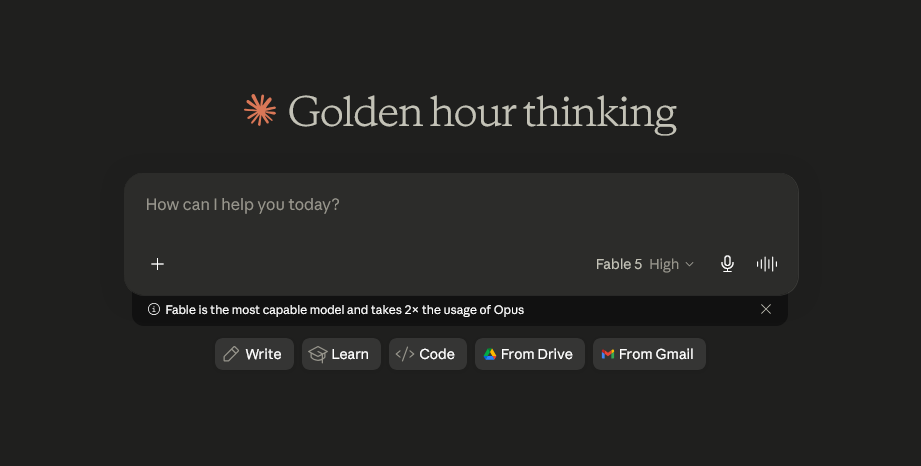
Fable clarifies before it drafts. Opus ships a draft first. Here's what that difference actually means for your workflow.
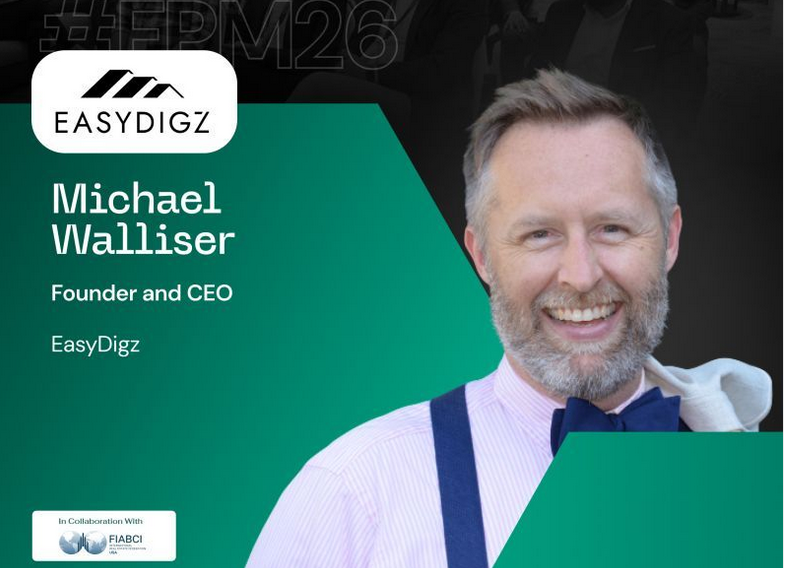
By Michael Walliser, Founder — EasyDigz
Fable Launched Today. Here's Why a Capability Comparison Misses the Point.
Claude Fable dropped today. Within an hour, my feed was full of benchmark screenshots and capability comparisons. I get it — that's how the internet processes a new model release. But if you're a knowledge worker who actually embeds these tools into daily operations, benchmarks don't tell you much about what your Tuesday is going to look like.
I run EasyDigz, a real estate operating platform. We use AI daily — not experimentally, but operationally. Writing listing copy, drafting agent communications, building internal documentation, generating market analysis frameworks. The work is real, the deadlines are real, and the cost of a bad output is real. So when Fable launched, I didn't run it through a reasoning puzzle. I gave it the same tasks sitting in my queue and watched what happened.
Here's what I found.
The Benchmark: Two Tasks, Two Models, Two Deliverables
I used two representative tasks from our actual workflow that morning:
Task 1: Draft an outbound email sequence for a brokerage recruiting campaign targeting agents in the Triangle NC market.
Task 2: Summarize a 14-page market conditions document into a two-page client-ready brief.
Same prompts, same context, both models. No special system instructions. Just the kind of prompt a busy operator writes on a weekday morning.
Opus on Task 1: Returned a complete three-email sequence, subject lines included, formatted and ready for review. It made assumptions about tone, audience familiarity, and call-to-action structure — and those assumptions were reasonable. Not perfect, but usable within one revision pass.
Fable on Task 1: Responded with two clarifying questions before writing a single word. It wanted to know whether the sequence was targeting captive agents at competing brokerages or independent agents, and whether the offer was compensation-led or culture-led. Then it drafted.
The Fable output, once it came, was tighter. More precise. The assumptions Opus made were replaced with deliberate choices — and I could see exactly why each choice was made because Fable had surfaced the decision points first.
On Task 2, the pattern held. Opus delivered a polished, structured brief — readable, professional, and largely accurate. Fable asked which sections I considered priority, noted two areas of the source document that contained conflicting data points, and flagged that one statistic appeared outdated. The final brief was less stylistically finished but more defensible as a client document.
Behavioral Differences Worth Understanding
First Response: Draft vs. Dialogue
Opus ships a draft on the first response. For time-pressed work, that's often exactly what you want — something to react to, edit, and move forward. Fable tends to open a dialogue before producing output. If you're not prepared for that, it can feel like friction. If you are, it feels like working with someone who actually read the brief.
Output Style: Polish vs. Precision
Opus produces output that looks presentation-ready. The formatting is clean, the prose flows, and you could hand it to someone immediately. Fable produces output that is informationally precise. It's accurate in a way that rewards careful readers, but it may need a formatting pass before it goes to a client. These are different strengths, not better and worse.
Token Efficiency
Fable's clarifying-question behavior means the first response is shorter. Total token usage across a completed task was comparable in my testing — sometimes lower with Fable because the tighter initial prompt produced a more targeted output that needed fewer revision cycles. This matters when you're thinking about per-task cost across high-volume workflows.
Decision Framework: When to Use Which Model
Use Opus when:
You need a complete draft quickly and you have a clear enough picture to edit from output
The task is presentation-dependent — client decks, formatted reports, polished marketing copy
You're working alone and iteration speed matters more than precision on the first pass
The stakes of a slightly wrong assumption are low and easily caught in review
Use Fable when:
The task has meaningful decision forks that affect the output significantly
You're producing something that will be relied on — a client brief, a compliance document, a financial summary
You have time for one round of dialogue but want to reduce revision cycles downstream
You're working in a domain where wrong assumptions are expensive to catch late
On pricing: Fable runs approximately 2x the cost of Opus per token at current API rates. That premium can pencil out quickly if Fable's clarify-first behavior eliminates one or two revision cycles on a high-stakes deliverable. It doesn't pencil out on routine, low-stakes drafting tasks where Opus's first pass is good enough.
Side-by-Side Comparison
Dimension | Claude Opus | Claude Fable |
|---|---|---|
First Response Behavior | Produces full draft immediately | Often clarifies before drafting |
Output Style | Polished, presentation-ready | Precise, informationally dense |
Assumption Behavior | Fills gaps with reasonable assumptions | Surfaces gaps before proceeding |
Best Use Case | Speed-priority drafting, formatting tasks | High-stakes, decision-sensitive documents |
Revision Cycle Expectation | 1–2 passes typical | Fewer passes after initial dialogue |
Relative Cost | Lower per-token cost | ~2x Opus; may offset in iteration savings |
Prompt Skill Required | Moderate — clear prompts improve output | Lower floor — Fable asks what it needs |
What This Means for Knowledge Workers Embedding AI in Their Workflows
Opus assumes. Fable clarifies. That single behavioral difference is the most useful frame for deciding which tool belongs where in your workflow.
If you've spent time developing strong prompt discipline — tight context, explicit constraints, clear output format — Opus will reward that investment with fast, usable output. If you're working on tasks where the decision space is wide and a wrong assumption costs you two revision cycles with a client or a colleague, Fable earns its price premium by surfacing those decisions before they become problems.
What Fable represents, more than a capability upgrade, is a model that behaves more like a prompt architect's collaborator. It doesn't just execute the instruction — it interrogates it. For operators running knowledge-intensive workflows, that behavioral profile fits certain slots in the stack very well. It just doesn't fit all of them.
The practical answer isn't Opus or Fable. It's knowing which task is on your desk and routing accordingly.
Want the Full Model Selection Guide?
We put together a one-page decision framework that covers model selection across six common knowledge work task types — including the specific prompt structures we use at EasyDigz for listing copy, market briefs, and agent communications. Just register on my site to reach out and we'll send it directly to your inbox.