How Cary has changed in the past 5 years
From Bedroom Community to Destination City
For decades, Cary, NC served primarily as a bedroom community for Raleigh — a quiet, well-planned suburb where Triangle professionals came home to sleep after long commutes into the city. But over the past five years, something significant has shifted. Cary is no longer riding on Raleigh's coattails.
The transformation hasn't happened overnight, but the momentum has been undeniable. A convergence of economic investment, cultural development, and shifting workforce patterns has elevated Cary from a convenient place to live into a genuinely compelling place to put down roots. Here's what's been driving that evolution:
Major job growth: High-profile employers and expanding tech companies have planted significant footprints in and around Cary, dramatically reducing residents' dependence on commutes into Raleigh or Research Triangle Park. For many professionals, the office is now just minutes away — not across town.
A thriving local culture: From the nationally recognized Koka Booth Amphitheatre to a rapidly growing food, arts, and dining scene, Cary has developed cultural anchors that give it a distinct and vibrant sense of place. This isn't a suburb borrowing its identity from a bigger neighbor — it's a city writing its own story.
Infrastructure built for growth: Thoughtful town planning, walkable mixed-use developments, and continued investment in parks, greenways, and public amenities have made Cary one of the most livable communities in the entire Southeast — not just the Triangle.
A magnet for relocating talent: Remote workers and corporate relocatees from higher cost-of-living markets like Northern Virginia, Austin, and the Bay Area are discovering that Cary delivers an exceptional quality of life at a fraction of the price — and they're arriving in growing numbers.
The result is something that real estate professionals and longtime residents can both feel: Cary is now generating its own gravitational pull within the Triangle market. Buyers, investors, and businesses are choosing Cary on its own merits — not simply because it sits next to Raleigh.
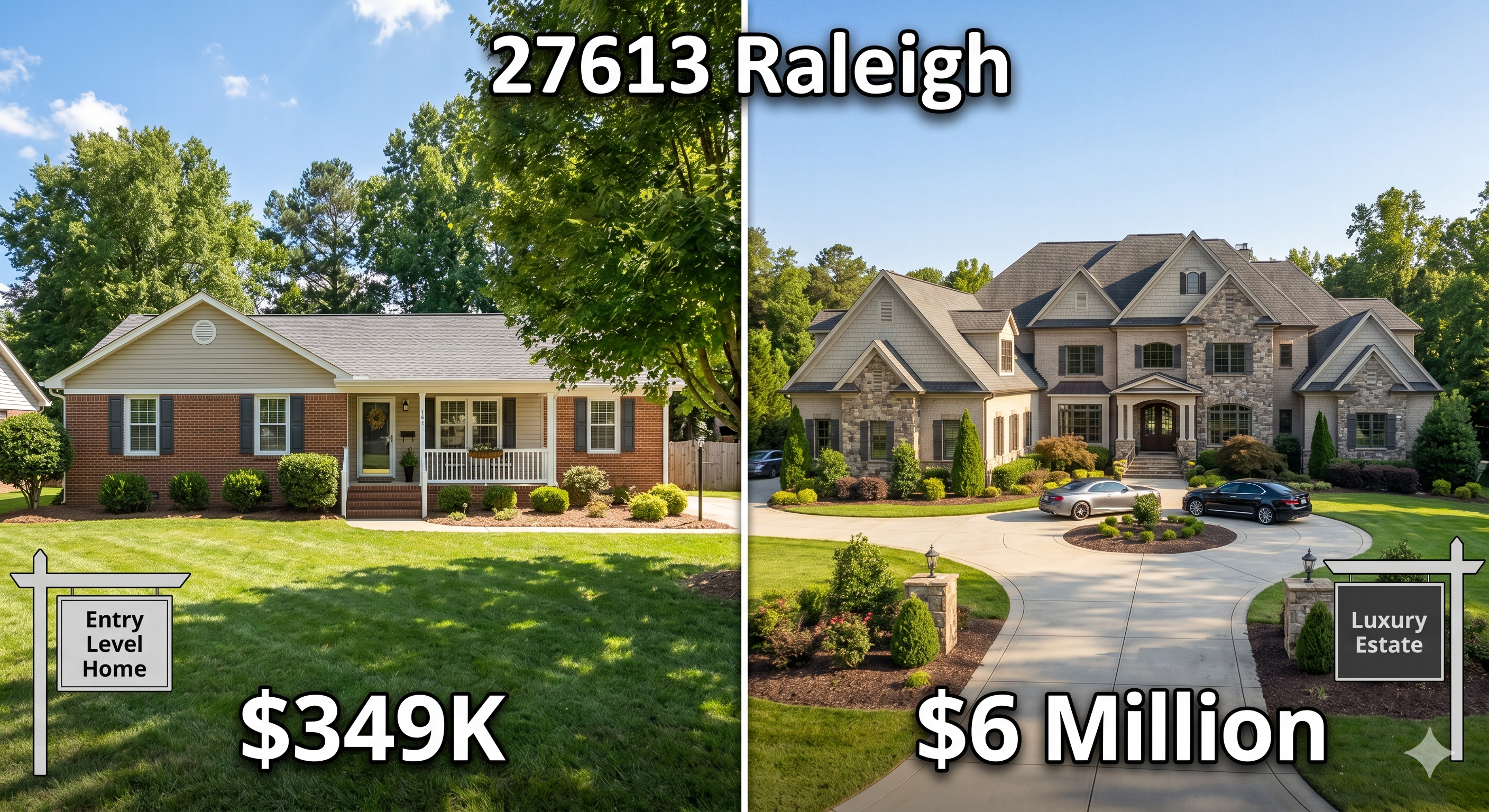
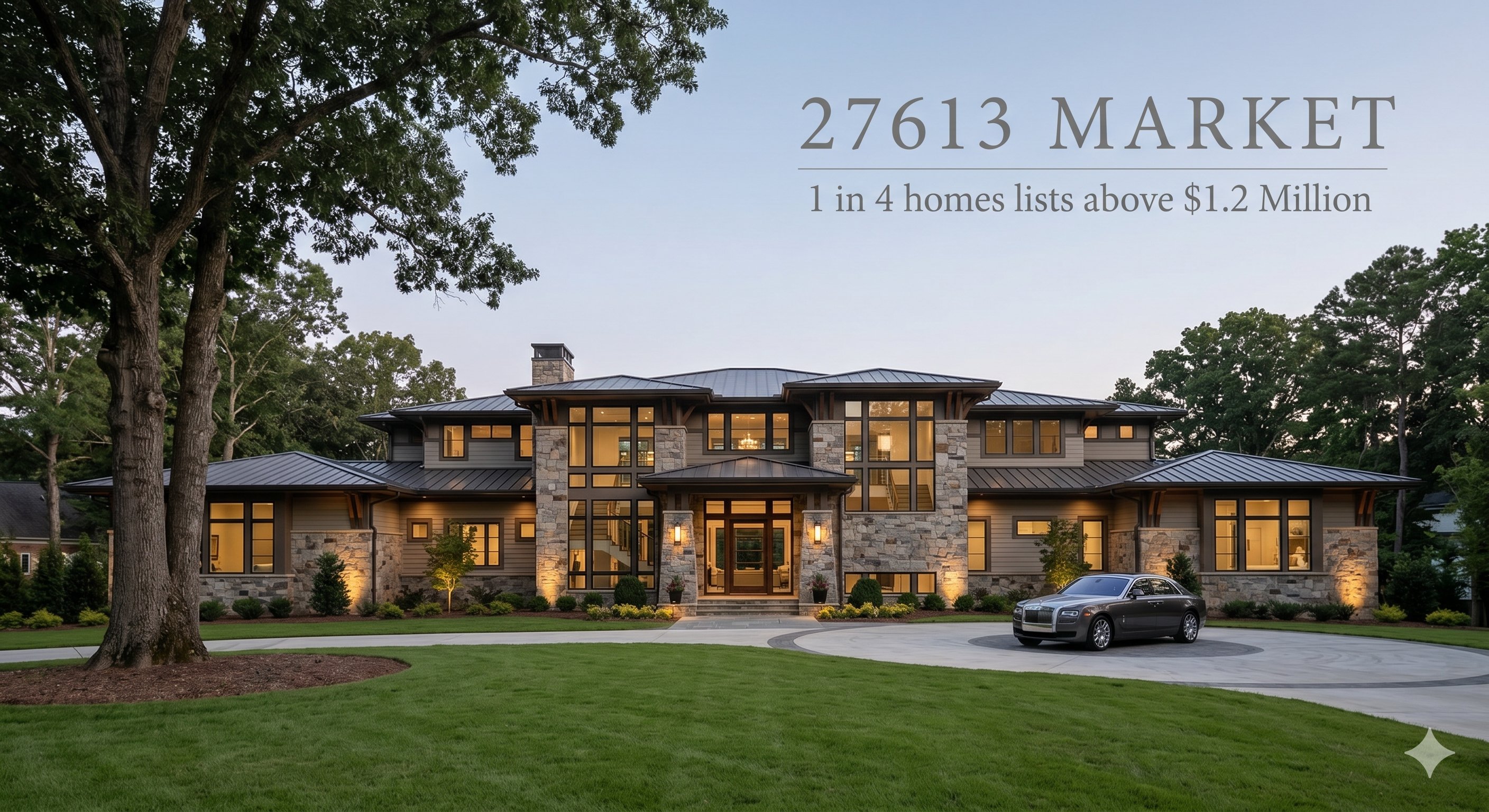
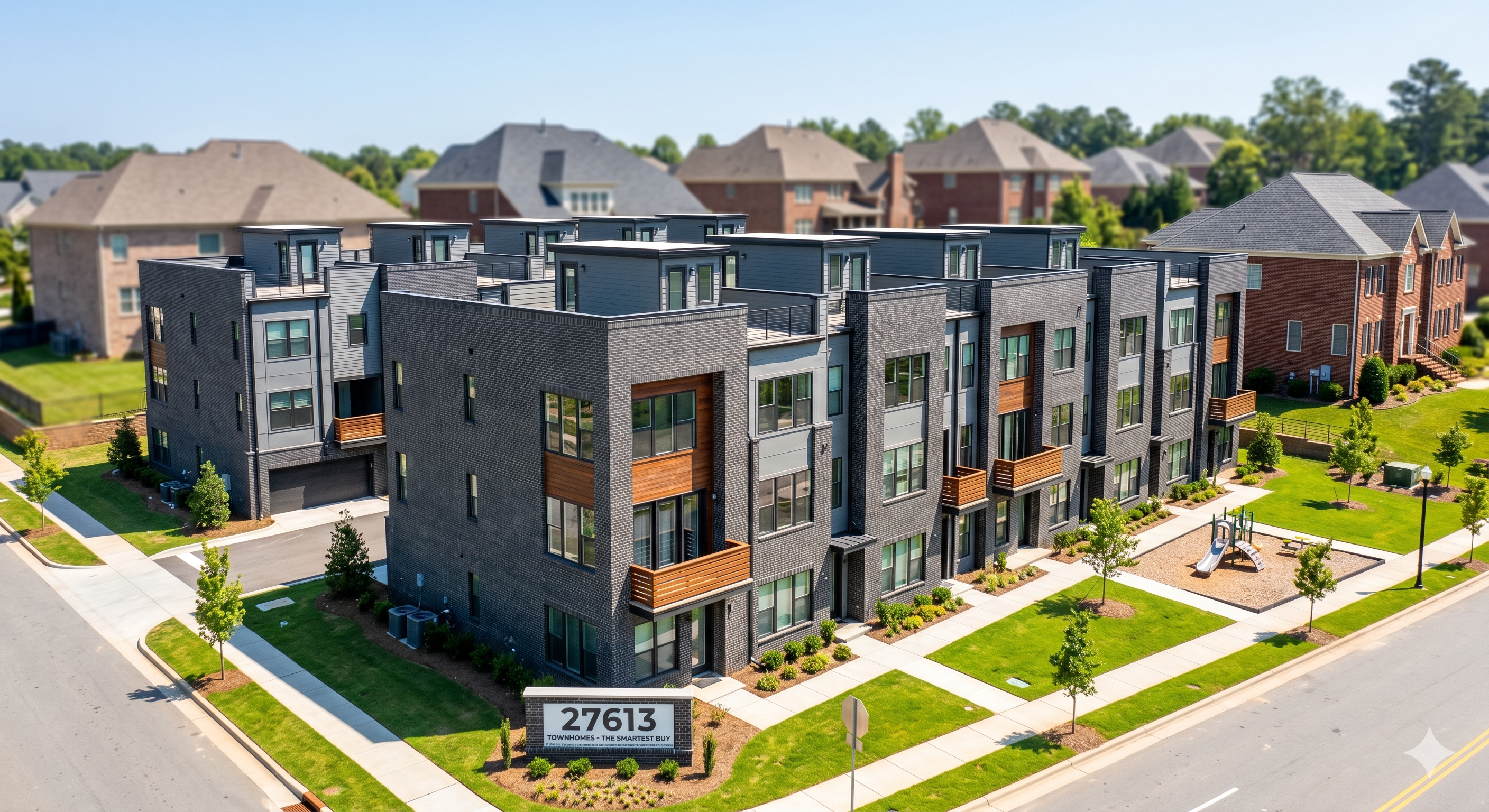
This shift has real implications for the housing market. Demand is no longer driven by a single type of buyer or a single price point. Entry-level buyers compete for townhomes and smaller single-family homes in established neighborhoods. Move-up buyers target larger properties in communities like Amberly, Highcroft, and Preston. And luxury buyers — many relocating from significantly pricier markets — find that Cary punches well above its weight class in terms of amenities, schools, and overall lifestyle.
This multi-tier demand creates a uniquely resilient market. When one segment softens, others often pick up the slack — which is a key reason why Cary has historically outperformed surrounding communities during broader market slowdowns.
Actionable tip for buyers: Don't assume Cary is out of reach simply because headlines suggest it's competitive. Work with a knowledgeable local agent who can identify pockets of relative value — specific zip codes, newer subdivisions with available builder inventory, or estate sales in older established neighborhoods — where motivated sellers or lighter competition may give you meaningful room to negotiate without sacrificing location quality.
Today, Cary is carving out a powerful identity of its own. A surge of new employers, cultural investment, and homegrown industry has transformed this once-quiet suburb into one of the most desirable destinations in the entire Triangle — not just a place to live, but a place to work, play, and confidently build a life.
Infrastructure investment: New parks, greenways, mixed-use developments, and community spaces have made Cary more walkable, connected, and livable than ever before.
Rising real estate demand: Homebuyers are increasingly targeting Cary as a primary destination — not just a compromise — driving strong demand across all price points.
The result? Cary is now creating its own gravitational pull within the Triangle real estate market, attracting buyers, investors, and businesses on its own merits.
Major Job Growth: Cary's Corporate Footprint Is Expanding Fast
Perhaps the single biggest driver of Cary's transformation has been the dramatic influx of corporate investment. For years, Research Triangle Park and downtown Raleigh captured most of the region's employment energy. That balance has meaningfully shifted. Companies like Bandwidth, Fidelity Investments, and SAS Institute — whose sprawling global headquarters sits right in Cary — have been joined by a growing number of technology, life sciences, and financial services firms setting up operations directly within or adjacent to the town's borders.
This matters enormously for real estate. When residents can work five or ten minutes from home instead of grinding through a 45-minute commute, their calculus around where to buy changes completely. Cary is no longer just a convenient place to sleep — it's become the center of people's daily lives. For homebuyers, that means proximity to employers is now a reason to choose Cary proactively, not simply to accept it as a reasonable trade-off.
Actionable tip for buyers: If you're relocating for a position in or near Cary, map your commute during actual work hours before settling on a neighborhood. Communities in western Cary near Davis Drive or along the NC-55 corridor can offer exceptional access to major employers while still delivering the quieter, more residential feel many buyers want.
A Thriving Local Culture: More Than Just a Safe Suburb
One of the most common knocks against suburban living is the sense that everything worth doing requires a drive into the city. Cary has been systematically dismantling that criticism. The Koka Booth Amphitheatre at Regency Park regularly draws nationally recognized performers and has become one of the Triangle's premier outdoor entertainment destinations. The WakeMed Soccer Park hosts major sporting events that attract visitors from across the region. And the Cary Arts Center anchors a growing creative community with galleries, performances, and classes year-round.
Beyond the marquee venues, Cary's dining and retail scene has matured considerably. Neighborhoods like Waverly Place and the emerging Downtown Cary Park area — a transformative mixed-use development that represents one of the most ambitious municipal investments in the town's history — are creating genuine "third places" where residents gather, linger, and connect. Independent restaurants, local breweries, coffee shops, and specialty retailers are choosing Cary in numbers that would have seemed unlikely even five years ago.
This cultural evolution has real implications for property values. Homes located within walking distance or a short drive of these cultural hubs are commanding measurable premiums, and that trend shows no signs of reversing as more amenities come online.
Infrastructure Investment: Built for Long-Term Livability
Cary's town government has consistently earned recognition for thoughtful, forward-looking planning — and the infrastructure improvements of the past five years reflect that reputation at scale. The expansion of the American Tobacco Trail and the broader greenway network now gives residents genuinely car-free options for recreation and even practical commuting within the town. New parks have been added across multiple neighborhoods, and existing facilities have been upgraded to meet the demands of a growing population.
The Downtown Cary Park project deserves special mention. This $100+ million investment is reshaping the town's core with event lawns, a splash pad, an adventure garden, food hall spaces, and connectivity to surrounding streets and greenways. When complete, it positions downtown Cary as a legitimate gathering place with the kind of energy typically associated with urban neighborhoods — while retaining the safety, cleanliness, and accessibility that Cary residents prize.
For buyers thinking long-term, infrastructure quality is one of the most reliable indicators of sustained property value. Towns that invest in parks, connectivity, and public spaces tend to hold value through market cycles better than those that don't. Cary's track record here is genuinely strong.
Actionable tip for buyers: When touring homes in Cary, ask specifically about proximity to greenway access points and planned development projects. A home near a future park or trail connection may be priced today without fully reflecting tomorrow's amenity value — that's a meaningful opportunity if you're buying with a long time horizon.
Rising Real Estate Demand: Cary Is Now a First Choice
All of these forces — jobs, culture, infrastructure — funnel directly into the housing market, and the data tells a clear story. Cary consistently ranks among the most searched and most competitive real estate markets in the entire Southeast, not just within the Triangle. Median home prices have risen substantially over the past five years, and while the broader market has seen some cooling from the peak frenzy of 2021 and 2022, Cary has maintained strong demand across a wide range of price points.
What's particularly notable is the breadth of that demand. Entry-level buyers are competing for townhomes and smaller single-family homes in established neighborhoods. Move-up buyers are targeting larger properties in communities like Amberly, Highcroft, and Preston. And luxury buyers — including corporate relocatees and remote workers from higher cost-of-living markets — are finding that Cary offers a quality of life that compares favorably to communities costing significantly more in places like Northern Virginia, Austin, or the Bay Area.
This multi-tier demand creates a uniquely resilient market. When one segment softens, others often pick up the slack, which is part of why Cary has historically outperformed surrounding communities during broader market slowdowns.
Actionable tip for buyers: Don't assume that Cary is out of reach just because headlines suggest it's competitive. Work with a local agent who can identify pockets of relative value — certain zip codes, newer subdivisions with builder inventory, or estate sales in older established neighborhoods — where motivated sellers or less competition may give you more room to negotiate without sacrificing location quality.
Today, Cary is carving out a powerful identity of its own. A surge of new employers, cultural investments, and homegrown industry has transformed this once-sleepy suburb into one of the most desirable destinations in the entire Triangle — not just a place to live, but a place to work, play, and build a life.
From Bedroom Community to Destination City
The transformation hasn't happened overnight, but the momentum over the last five years has been undeniable. Here's what's been driving Cary's evolution:
The result? Cary is now creating its own gravitational pull within the Triangle real estate market, attracting buyers, investors, and businesses on its own merits.
.